Dept. IV · Home
Steampunk Wall Clocks at Three Budgets
How to choose a steampunk wall clock: gear-look or true moving gears, plastic, metal or brass, and what to read in a listing before paying at any budget.
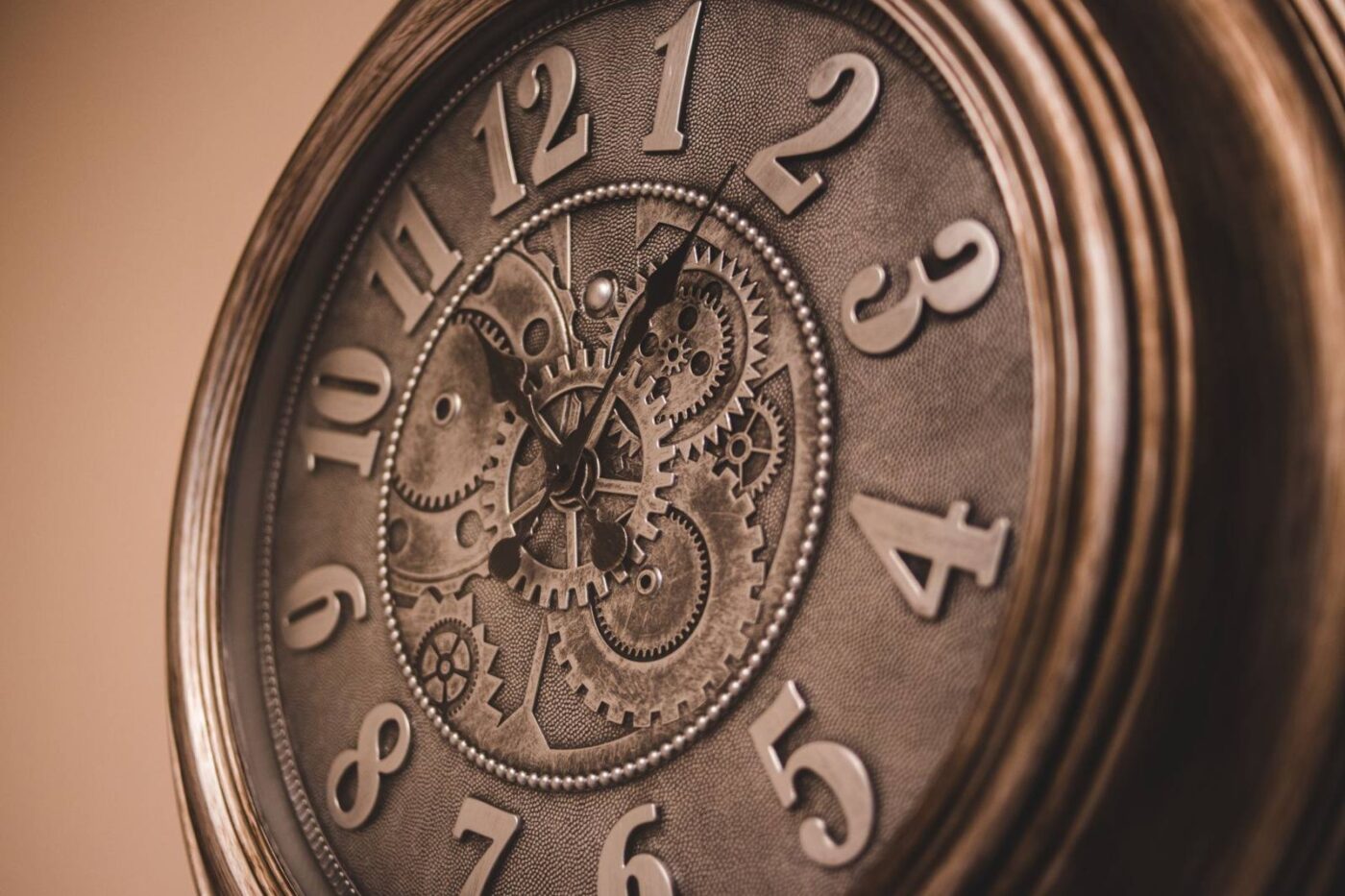
A steampunk wall clock shows its mechanism: gears on the face, an open skeleton frame, or a movement visible behind glass. Houzz names grandfather clocks with exposed gears among the furniture of the style, and small gear-themed wall art among its decorations. Clocks fall into three kinds: gear-look pieces with a plastic or flat metal frame; clocks with gears that turn; and skeleton or brass clocks built to last. Read the listing before paying, for a clock described as having “gears” may mean only that gears are printed or cut into it.
- Houzz lists grandfather clocks with exposed gears among the furniture of a steampunk room
- Small gear-themed wall art is a Houzz Singapore recommendation for dressing walls in the style
- Homestyler suggests making wall art from gears and sourcing it at flea markets
- Amazon and Etsy prices cannot be read by us, and so none is stated here
Disclosure: some links on this page are affiliate links, marked by the products they name. As an Amazon Associate, steampunkary.com earns from qualifying purchases. A purchase through these links may earn the site a commission at no cost to you, and it never affects what is recommended. How this works.
There is no clock better suited to a steampunk room than one that makes no secret of how it works. The trouble is that “steampunk clock” covers everything from a flat piece of black plastic with a gear printed on it to a skeleton movement in polished brass, and the two have little in common but the word. We take the reader through the three kinds, the three budgets, and the questions to put to any listing. For the room in which the clock will hang, see our guide to steampunk decor.
Steampunkary · Ad
The Outfitters' Catalogue
Everything named in this guide, by budget
Fig. 1Thrifty
Gear-look wall clock with a plastic frame
Light, inexpensive, and decorative; the gears are mostly for show.
Fig. 2Thrifty
Black cutout steampunk wall clock
A flat silhouette of gears and numerals in black.
Fig. 3Mid-range
Wall clock with moving gears
Metal or wood frame, with gears that turn behind the face.
Fig. 4Mid-range
Skeleton wall clock
An open face that shows the works.
Fig. 5Thrifty
Clock movement kit with hands
For the reader who would rather build a face of his own.
Fig. 6Heirloom
Brass skeleton clock with exposed movement
A clock to be kept for years rather than a season.
What Makes a Clock Steampunk
The Houzz survey of the style lists, among furniture, grandfather clocks with exposed gears. That is the useful rule: the mechanism must be seen. A clock with a plain face and a hidden movement is a Victorian clock; a clock whose wheels turn in plain view is a steampunk one. The same survey recommends keeping to a palette of dark base tones with brass and copper for the metals, and the clock should answer to that palette.
The wall is a good place for the effort. Houzz Singapore advises small gear-themed wall art in an otherwise industrial room, and Homestyler goes so far as to suggest making wall art from gears, and to look for pieces at flea markets. A clock is the one piece of wall art that earns its place by being useful.
The Three Kinds of Clock
| Kind | What it is | Commonly made of | What to check |
|---|---|---|---|
| Gear-look | A face with gears printed, cut out or molded in relief | Plastic, thin metal, MDF | Whether any gear actually turns |
| Moving-gear | A face with gears that turn behind or around the dial | Metal or wood frame | Whether the gears drive the hands or merely turn beside them |
| Skeleton | An open frame or dial through which the movement shows | Metal; brass in the better examples | Material, finish, and the maker’s statement on the movement |
The distinction in the second column is the one that matters. A listing that says “all moving gears” does not say that the gears keep the time; we make no general claim about it, and say only that the buyer should read what the listing states, and ask if it does not state it.
At Three Budgets
Thrifty. A gear-look wall clock in a plastic or thin-metal frame, or a black cutout silhouette, is the cheapest way to the look. These are decorative objects first. For a bedroom, a hallway or a party they answer very well; for a room one wishes to be admired for, they will disappoint in a year. We give no price, for Amazon and Etsy do not permit us to read one and the figures we have seen elsewhere come from search listings, which change daily.
Mid. A clock with a metal or wood frame and gears that actually turn, or a skeleton wall clock with an open face, is the sensible purchase for most households. The works are visible, the frame is heavier, and the finish is usually better than painted plastic. Some makers offer the same design in two sizes; the larger is generally the more convincing on a bare wall, as the smaller disappears among pictures.
Heirloom. A brass skeleton clock with an exposed movement is the clock that is kept for years. At this level the buyer should ask for the material (solid brass or plated), the kind of movement, and whether the maker can supply a replacement. A well-made clock should be repairable; one that is not is simply a more expensive version of the first kind.
A reader who owns tools and patience may prefer to build. Clock movement kits, sold with hands, supply the part that keeps time; the face, gears and frame are then the maker’s own. Our guide to where to buy gears and watch parts covers the supplies, including which watches are better left alone.
Where to Hang It, and With What
Houzz’s survey puts the clock among other accessories of the style: antique globes, typewriters, barometers, telescopes and gear bookends. A single clock of good size on a plain wall carries more weight than three small ones. Two cautions follow from experience of other people’s rooms, not our own: a very dark clock on a dark wall vanishes, and a gear clock set beside gear art and gear shelves begins to look like a catalogue. Let the clock be the one frankly mechanical object on the wall, with brass or copper elsewhere in the room.
For the light by which the clock is read, the steampunk lamps guide takes up pipe lamps, kits and what a UL listing means; the question of Edison bulbs is taken further in lumens, warmth and wiring.
Why a Clock, and Not Another Gear
Gears are the commonest ornament of the style, and the commonest mistake is to apply them to everything. A clock is the rare object for which gears are honest: it has wheels, they are really there, and showing them is no more than candor. For that reason a clock persuades where a gear glued to a lampshade does not, and a reader who buys only one mechanical piece for a room does well to make it this one. Where the room has little else of the style, the clock may be the only evidence needed.
What to Ask Before Buying
- Does the clock keep time by its gears? Read the listing for any statement of how the movement works.
- What is the frame made of? Plastic, MDF, metal, wood or brass look alike in a photograph and differ by years in the wearing.
- What powers it? Most wall clocks run on a battery; confirm the size and whether the gears turn from the same movement.
- What are the real dimensions? Diameter alone says little about a skeleton clock, which may stand out from the wall.
- Is there a return window? Photographs flatter, and a clock is a thing one must see on the wall.
Frequently Asked Questions
What is a steampunk wall clock?
A clock that shows its mechanism, through exposed gears, an open skeleton frame or a visible movement. Houzz lists grandfather clocks with exposed gears among the furniture of the style.
How much does a steampunk wall clock cost?
It varies with the material: plastic gear-look pieces at the bottom, metal moving-gear and skeleton clocks in the middle, brass at the top. We state no figure, since Amazon and Etsy prices cannot be read by us and search-listing figures change daily.
Do the gears on a steampunk clock really turn?
On some they do and on some they do not. A listing that says only “gears” may mean printed or cut-out gears; read what it states about the movement, and ask the seller if it is silent.
Can I make a steampunk clock myself?
Yes: movement kits supply the mechanism and hands, and the face and gears may be of your own design. Homestyler recommends making wall art from gears.
Where should a steampunk clock go?
On a plain wall, as the one openly mechanical object, among the brass and copper of a room whose palette is dark.
Is a grandfather clock steampunk?
When its gears are exposed, Houzz counts it among the style’s furniture; a closed case with a hidden movement is simply a Victorian clock.