Dept. I · What is Steampunk
The Steampunk Aesthetic: Materials, Colors and the Details That Sell It
What gives an object or outfit the steampunk look: brass and copper, exposed mechanism, sepia tones and a few period details, and what merely decorates.
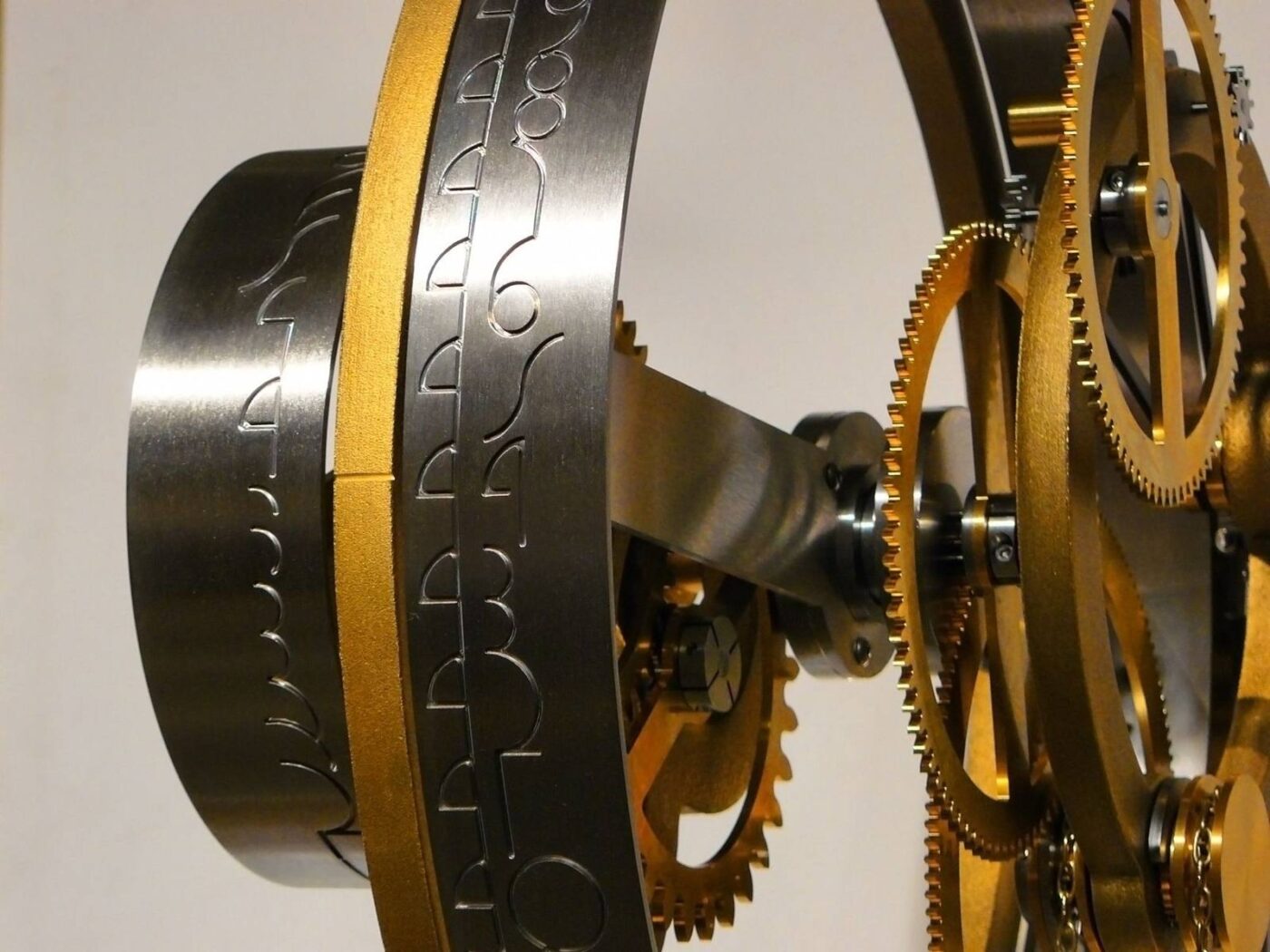
The steampunk aesthetic is a nineteenth-century look applied to modern things: brass and copper, visible mechanism, and a muted, sepia palette. The American Heritage Dictionary records it as a second sense of the word, “an aesthetic style inspired by steampunk fiction”. What sells it is less the quantity of gears than the idea behind them: technology laid bare and handmade, in place of the sealed, glossy modern device. Sources agree on the metals and the mood; none that we read fixes a strict color chart.
- Metals: brass and copper are the signature materials
- Palette: sepia tones, in the words of a Northumbria University expert comment
- Principle: exposed mechanism, the opposite of the sealed “black box”
- Details that recur: goggles, airships, corsets worn as outerwear, pocket watches
- Warning: a gear glued to a modern object is decoration, not design
Disclosure: some links on this page are affiliate links, marked by the products they name. As an Amazon Associate, steampunkary.com earns from qualifying purchases. A purchase through these links may earn the site a commission at no cost to you, and it never affects what is recommended. How this works.
A reader asking what makes a thing look steampunk is asking two questions at once: what materials does it use, and what is it saying about machinery? The first is easy to answer and the second is the one that matters. We take them in turn below, and we are careful to say which statements rest on a source and which are simply the common practice of makers. The larger subject is introduced in what is steampunk; this page is concerned only with the look.
The Look in One Sentence
The dictionary’s second sense is as good a start as any: an aesthetic style inspired by steampunk fiction. The fiction is set in an alternate, invention-saturated nineteenth century, usually Victorian or Edwardian, and the style borrows that imagined world for clothing, art, furniture and gadgets. Garth Smith’s thesis at the University of Waikato follows Mike Perschon in naming three aspects of steampunk: retrofuturism, the neo-Victorian, and technofantasy. A good steampunk object can be examined under all three headings: it imagines a future as the past would have built it, it invokes Victorian manners or materials, and it works by wonder, not strictly by physics.
Materials: Brass, Copper and What Goes With Them
Brass and copper are the metals of the style. Northumbria University’s page for the cultural historian Claire Nally quotes a description of steampunk as a taste for brass and copper and the ticking, hissing grind of Victorian technology, and credits the words to K. W. Jeter. The page is a press release and not a catalogue of materials, and it does not mention leather, wood or iron.
For other materials we turn to makers who state their own. The maker Datamancer describes its handmade keyboards, displays and mice as built of brass, copper, hardwood and glass, with real typewriter keys for the typing. Jake von Slatt’s Steampunk Workshop, one of the best-known maker sites of the 2000s, lists among its projects etched tin, a telegraph sounder reproduction and a clockwork guitar pickguard. These are individual makers; we draw from them no rule about what a steampunk object must be made of. We do note the pattern in both: a modern device in an older material.
The reader who cannot afford the real metal will find the faux-metal methods on their own page, how to make plastic look like old metal.
Colors: Sepia, and Not Much Else We Can Cite
Nally calls steampunk synonymous with sepia tones, and says it takes a nostalgic yet critical view of the Victorian period. That is the only statement about a palette that we could trace to a page we had read. Searchers do ask about steampunk colors, wall colors and outfit colors, and a thorough palette guide would be welcome; but we decline to invent one. What we can say is that the metals named above supply the warm tones, and that the sources are silent on the rest.
Nally also notes a darker strand called “steamgoth,” which overlaps with goth dress. A reader who prefers black will find that a respectable branch of the family and not a departure from it.
The Principle Beneath the Brass: Exposed Mechanism
The idea that separates a steampunk object from a merely brass-colored one is that the mechanism is shown. Perschon and Smith describe the style as technology laid bare, in reaction to what Smith calls black-box technology: sealed, slick modern devices whose workings the user never sees. Perschon uses the word bricolage for the way steampunk artworks are assembled from found and made parts.
This is why the mockery of the style is so exact. Smith quotes the novelist Catherynne Valente’s warning that taking the technology of the era seriously means being honest and ruthless with it, or else one is simply gluing gears to one’s fingers and announcing oneself a train. Jake von Slatt joked about the same fault in his own work, with a caption advising readers to glue a gear on it. Gears are the movers of the genre’s imagined technology, as Wendy Van Camp puts it in Indie Author Magazine; but a gear that moves nothing is a sticker. The test of a detail is whether it appears to do something.
The Details That Recur
Certain objects appear so often that they are shorthand for the whole.
| Detail | What the sources say |
|---|---|
| Goggles | Eye protection for pilots and engineers in the fiction; not Victorian, since the first recorded mention of goggles dates from 1903. See why goggles mean steampunk |
| Airships | A ship-like platform under a lighter-than-air craft, an icon of the style; the 1937 Hindenburg disaster is the history the fiction bypasses |
| Corsets | Worn as outerwear in steampunk, and associated by Smith with female empowerment |
| Bustles | Dropped in the fiction’s engineering heroines because a bustle would catch in gears |
| Top hats and bowlers | In Neal Stephenson’s The Diamond Age, the top hat signals standing and the bowler a lower rank |
| Pocket watches | Carry gadgets in the fiction, such as the dart-firing watch of Carriger’s Lefoux |
| Octopus | A recurring motif, credited to the influence of Jules Verne |
The common thread is plain: each is a period object made to do an improbable job.
Newer Machines in Old Dress
Some of the best-loved objects in the style are modern ones in period costume. Datamancer’s first piece, a Victorian-style brass keyboard, placed typewriter keycaps on a modern keyboard, and the firm says that idea became the core of its work. Two scientific curiosities appear often as accessories to the look. The nixie tube is a neon-filled glow lamp that displays digits through shaped cathodes; Burroughs introduced it in August 1955, and hobbyists revived it from around 2000. It is not Victorian at all, and that is rather the point: it reads as old because it is visibly an instrument. The Tesla coil, a high-frequency transformer capable of very high voltage at low current, was unveiled in 1891, according to the National MagLab.
A Short List for the Reader Building a Look
Without presuming to dictate a style, we would counsel the following:
- Let brass or copper lead. They are the metals the sources name, and the look is built around them.
- Show a working part. A visible movement, a dial, a lever; the mechanism is the point.
- Keep the base modern if it must be usable. A phone case, a lamp or a keyboard in brass dress is a recognised tradition.
- Add one or two period details, not twelve. A pair of goggles and a pocket watch say more than a bandolier of both.
- Be honest about history. The goggles are not Victorian, and no one will mind if the reader says so.
Frequently Asked Questions
What is the steampunk aesthetic?
A style inspired by steampunk fiction, which imagines nineteenth-century technology, and in practice a look built on brass and copper, visible mechanism and a sepia mood. Smith, following Perschon, names retrofuturism, the neo-Victorian and technofantasy as its three aspects.
What colors are steampunk?
The only palette statement we could source is Nally’s: steampunk is synonymous with sepia tones. Brass and copper supply much of the color; beyond that, practice varies and we found no authority that fixes a chart.
What materials are used in steampunk?
Brass and copper are the signature metals. Individual makers also work in hardwood, glass, etched tin and real typewriter keys.
What makes something steampunk and not just Victorian?
An alternate or imagined technology, shown openly. The Victorian setting is the backdrop; the retrofuturist machinery is what distinguishes it.
Are gears necessary?
They are the stock symbol, described as the movers of the genre’s technology, but a decorative gear is a common fault. Valente’s and von Slatt’s jokes about gluing gears on are aimed at precisely that.
Is steampunk a style or a genre?
Both. The American Heritage Dictionary defines the fiction and the aesthetic style separately, and Smith argues that steampunk is better seen as an aesthetic that can be applied to any genre.